
November 2026
Engineering Tips: Changes to Rain Load Design Requirements in ASCE 7-22
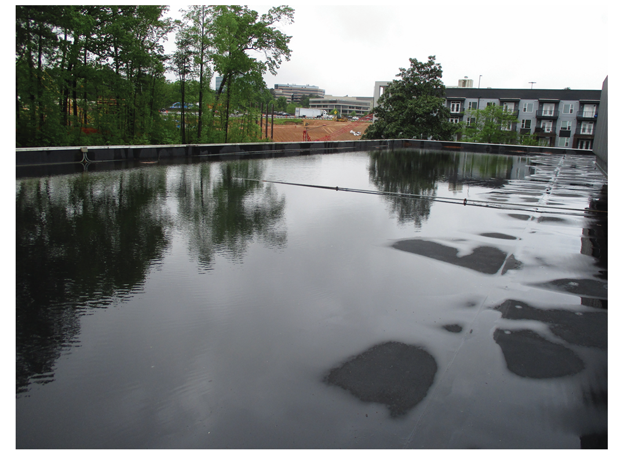
The rain code changes will have an impact on how builders approach new building construction as well as building additions and alterations. Early coordination between the structural engineer and engineer of record responsible for designing the drainage systems is vital for smooth project delivery. Secondary drainage provides an alternate path for roof drainage in the event the primary path is clogged or not working. AISC Design Guide 40 Rain Loads and Ponding provides guidance for designers (Figures have been included herein).
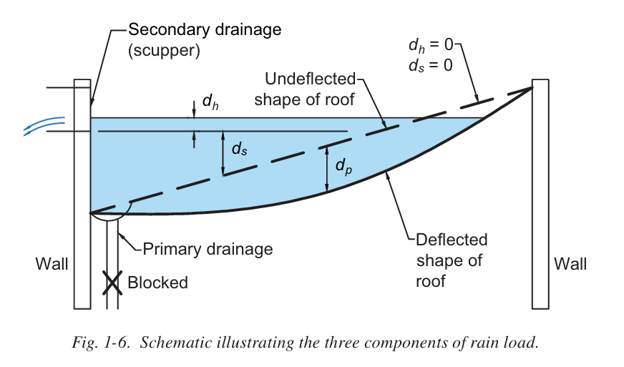
In previous codes, the secondary drainage system could be at the same elevation as the primary drainage when ponding occurs and scuppers are used. Secondary drainage system inlet is now to be vertically separated from the primary drainage inlet by 2” in Section 8.2. This increases the depth of water on the undeflected roof or static head (ds). Ponding calculations are now required to include the depth of water on the deflected roof or ponding head (dp). The total rain load applied has increased from previous versions resulting in additional costs when ponding occurs.
Existing roofs receiving water discharge from new construction are now to be evaluated to either support the loads or be upgraded to support loads in new Section 8.4. This structural evaluation of existing construction and any potential reinforcement improvements needs to be considered in the design and planning process or designed to keep new construction drainage independent from existing roof surfaces.
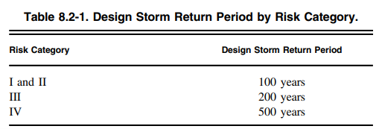
Design Storm Return Periods are now based on Risk Category in new Table 8.2-1. In previous codes, the Design Storm Return Period of 100 years was used. Risk Category III and IV buildings will have greater rain design loads resulting in additional costs when ponding occurs.
Rain-On-Snow Surcharge Load increased from 5 to 8 psf in Section 7.10 with snow changes. Low sloped roof projects will have increased loading potentially resulting in additional costs.