Safety: Complacency on the Jobsite
 Complacency doesn’t show up on day one. It shows up on day one thousand — after you’ve climbed that same ladder, run that same saw, or rigged that same load so many times that it stops feeling like a decision and starts feeling like muscle memory. That’s exactly when it gets dangerous.
The data backs this up: across construction and manufacturing, a disproportionate number of serious injuries happen to experienced workers doing routine tasks, not new hires learning something unfamiliar. Familiarity breeds shortcuts, and shortcuts feel safe right up until the one time the conditions are slightly different, like a worn strap, a distracted coworker, a step that’s usually dry but isn’t today. The fix isn’t more caution in general, it’s noticing the specific moment a task has become automatic. That’s your cue to slow down, not speed up.
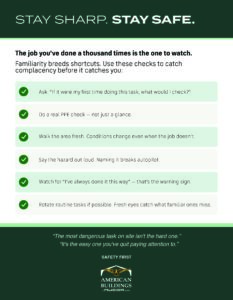
Catch Yourself BEFORE Complacency Does
The most dangerous task on site isn’t the hard one. It’s the easy one you’ve quit paying attention to.
- Do a real PPE check — not a glance.
- Walk the area fresh. Conditions change even when the job doesn’t.
- Say the hazard out loud. Naming it breaks autopilot.
- Watch for “I’ve always done it this way” — that’s the warning sign, not the excuse.
- Rotate routine tasks when you can. Fresh eyes catch what familiar ones miss.
Download the complacency checklist and post it where your crew will see it.
Complacency Checklist